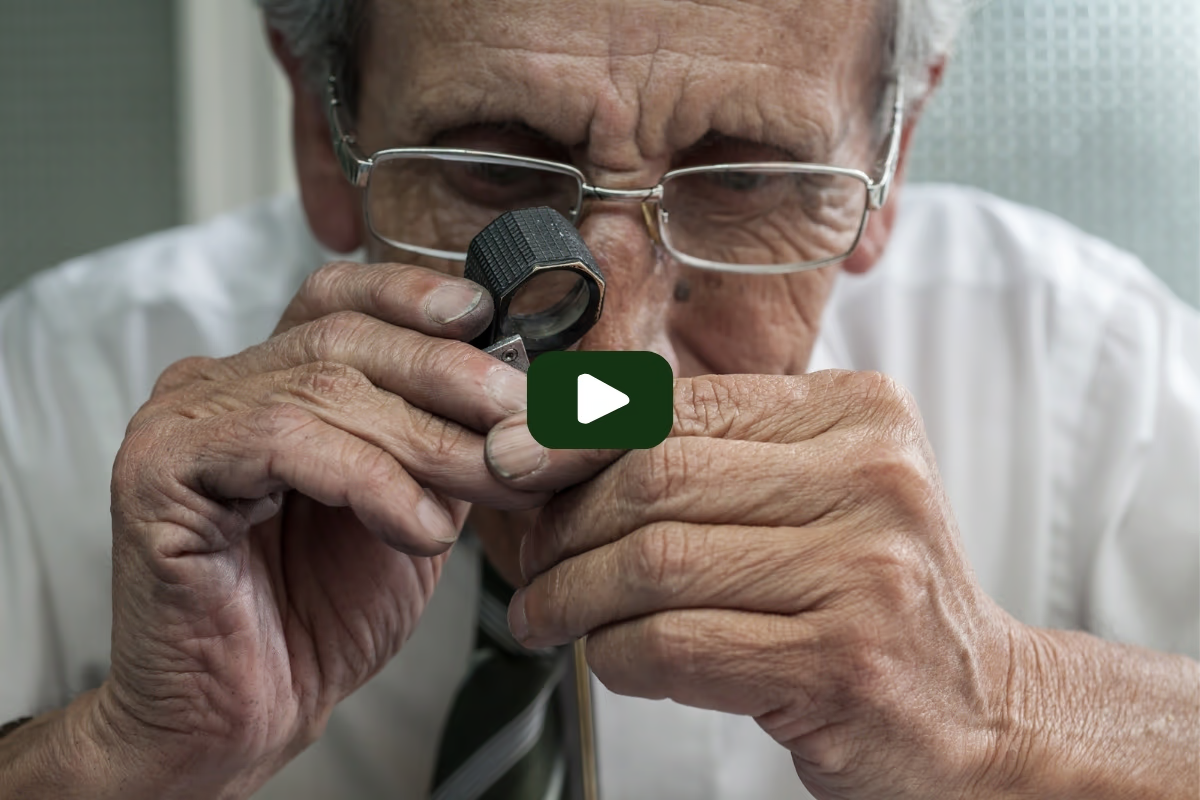
The story starts in 1973, when an inquisitive apprentice took a short stone-cutting course taught by a Spanish and a Dutch instructor who spotted rare potential. Encouragement turned into a vocation, and a vocation into a career. Early posts in Bogotá ateliers refined his eye for symmetry and his patience for polish, before a demanding collaboration with industry legend Victor Carranza set a new standard. In that environment, Ricardo Jiménez learned how to listen—to the material, to the light, and to the small, decisive adjustments that separate a merely good stone from a memorable one.
Reading the Rough in Colombian Emeralds
Emerald cutting is an art of interpretation. Ricardo Jiménez begins by “reading” the rough: mapping the volume, the grain, the tensions, and the inclusions that give an emerald its character—and its challenges. The aim is balance: preserve meaningful weight without dulling the saturation, elevate clarity without draining color, and fix the angles so the stone returns light with conviction. You don’t dominate an emerald; you understand it. That is why his first decisions—orientation, windowing, table size, pavilion depth—are made with care, so the finished gem feels alive rather than forced.
In the Bogotá Workshop
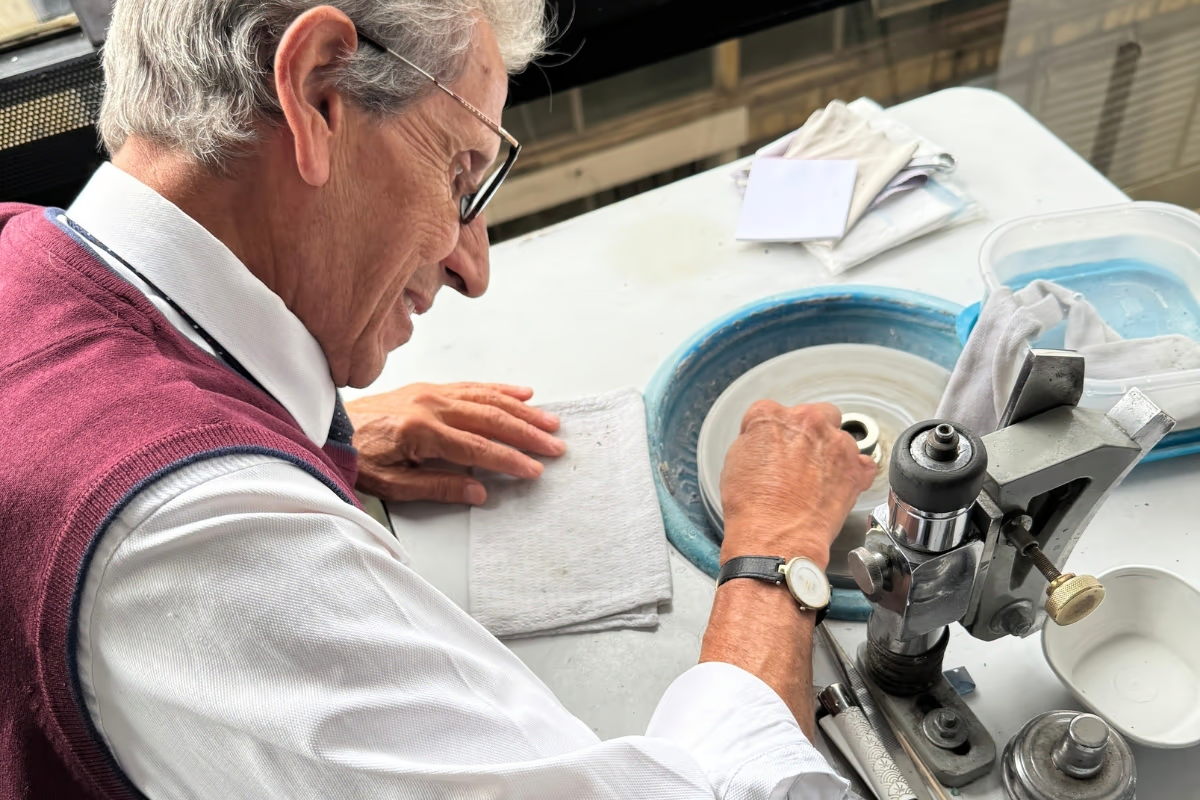
Step into his workshop and you find a space designed for precision: calibrated lighting, tuned machinery, and custom tools that favor control over spectacle. Here, Ricardo Jiménez collaborates with Colombian emerald dealer George Smith, aligning on a simple goal—draw out the best in the stone without ever betraying it. The discipline is visible at every station: measured laps, clean dop work, and a methodical sequence that protects the stone’s structure while steadily sharpening its voice.
Ricardo Jiménez on Tradition and Adaptation
Tastes evolve across Europe, Asia, and North America, and Ricardo Jiménez adapts to them without losing the core of his practice. Classic emerald cuts—square or rectangular—often remain the best way to conserve color and value in Colombian emeralds, but he’ll consider ovals, pears, or hearts when the rough invites them. What never changes is the priority: integrity of the material. Technique exists to serve the gem, not to show off the cutter. A well-cut stone, he likes to say, speaks for itself.
The Cut That Quietly Impresses
Non-conventional designs can be stunning, yet Jimenez is careful about fashion that costs color or carat weight. His preference is for proportion that looks inevitable: tables that don’t wash out saturation, crown heights that enliven the face, and pavilions that return light cleanly. The result is not flashy; it’s convincing. Whether the stone is museum-grade or modest, the same discipline applies—observe longer, cut less, and polish only what the emerald can carry with grace.


Have a question, correction, or insight to add? Share it below. We read every comment and moderate for clarity and civility.