Colombian Emerald: Inside the Rare Trapiche Phenomenon

A trapiche emerald—the rarest form of Colombian emerald—shows a fixed six-rayed star created by sectorial growth interruptions and dark inclusions along crystal boundaries. Found almost only in Boyacá’s historic mines, it’s a natural sculpture, not a light effect like asterism.

Colombian Emerald: Inside the Rare Trapiche Phenomenon

A trapiche emerald—the rarest form of Colombian emerald—shows a fixed six-rayed star created by sectorial growth interruptions and dark inclusions along crystal boundaries. Found almost only in Boyacá’s historic mines, it’s a natural sculpture, not a light effect like asterism.

In this article

What Is a Trapiche Colombian Emerald?

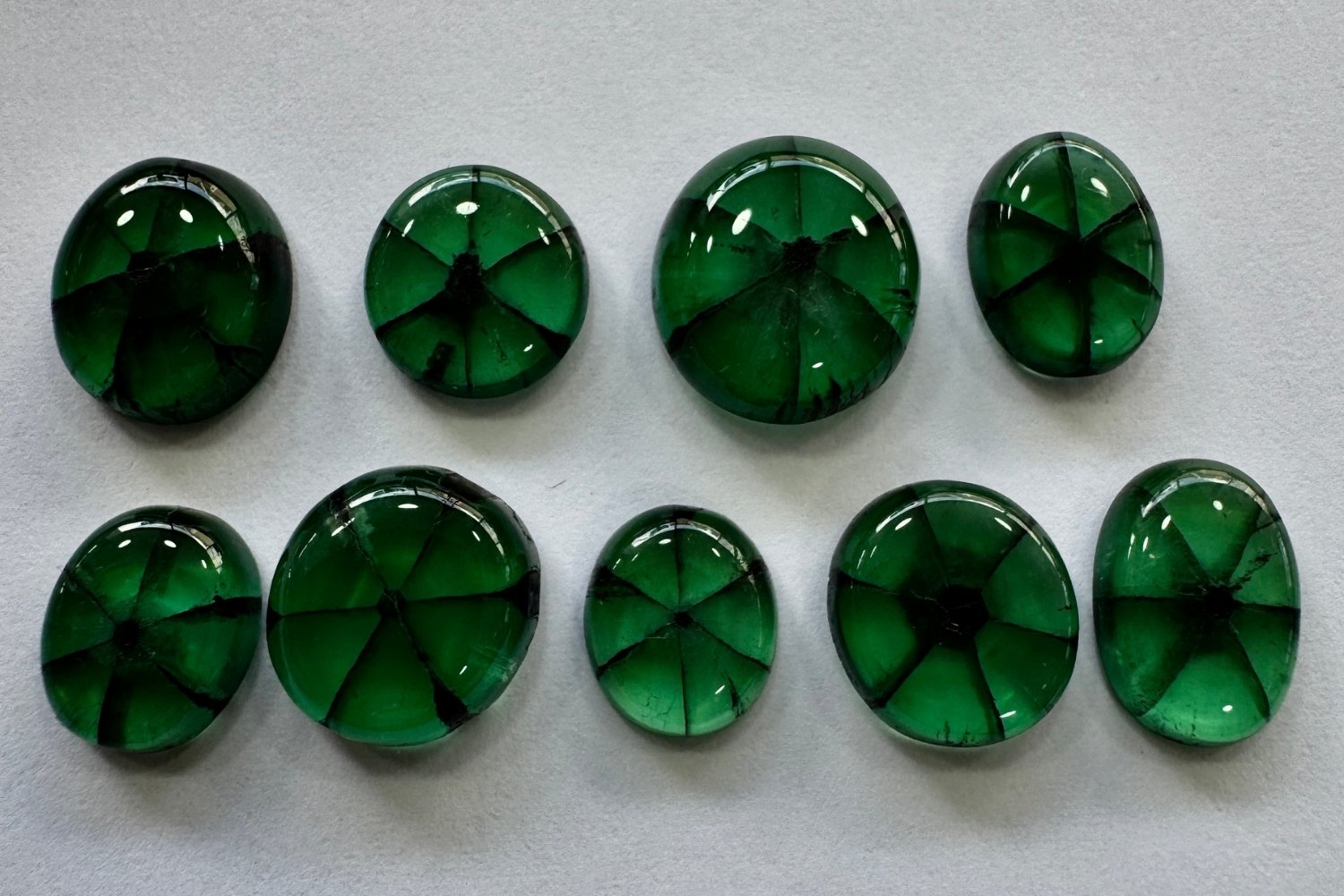
Among all varieties of Colombian emerald, the trapiche emerald stands out as one of the most visually arresting. Characterized by a six-rayed dark star pattern radiating from the center, the trapiche Colombian emerald resembles a wheel or gear — a pattern that inspired its name, borrowed from an old sugarcane grinding device.

These gems are geological masterpieces, found almost exclusively in Colombia’s historic mines: Muzo, Peñas Blancas, La Pita, and Coscuez. Their uniqueness lies not only in their appearance but also in their formation — a result of rare geological interruptions during crystal growth.

Trapiche colombian emerald
Trapiche emeralds from Alpine Green

The Geological Origins of the Trapiche Colombian Emerald

Trapiche emeralds are formed under hydrothermal conditions in sedimentary metamorphic rock — a distinctive geological setting that Colombia is uniquely known for. The characteristic star-shaped pattern results from interruptions in crystal growth, where dark inclusions like carbon or organic residues separate sectors of emerald crystal.

Unlike asterism in sapphires, the trapiche pattern is fixed and directional, embedded into the crystal structure itself. The emerald maintains its classic beryl chemistry (Be₃Al₂Si₆O₁₈), yet its visual architecture is singular. Each trapiche Colombian emerald is a natural sculpture born deep within the Earth.

What Makes the Trapiche Colombian Emerald So Rare?

Even in Colombia — the world’s top source of emeralds — the trapiche formation is incredibly scarce. Less than 0.1% of emeralds extracted from regions like Muzo or Peñas Blancas exhibit this pattern.

This rarity has kept trapiche emeralds largely outside mainstream jewelry until recently. Today, however, designers, collectors, and gemologists are rediscovering their one-of-a-kind aesthetic, giving them a new place of honor in high jewelry and gemstone collections.

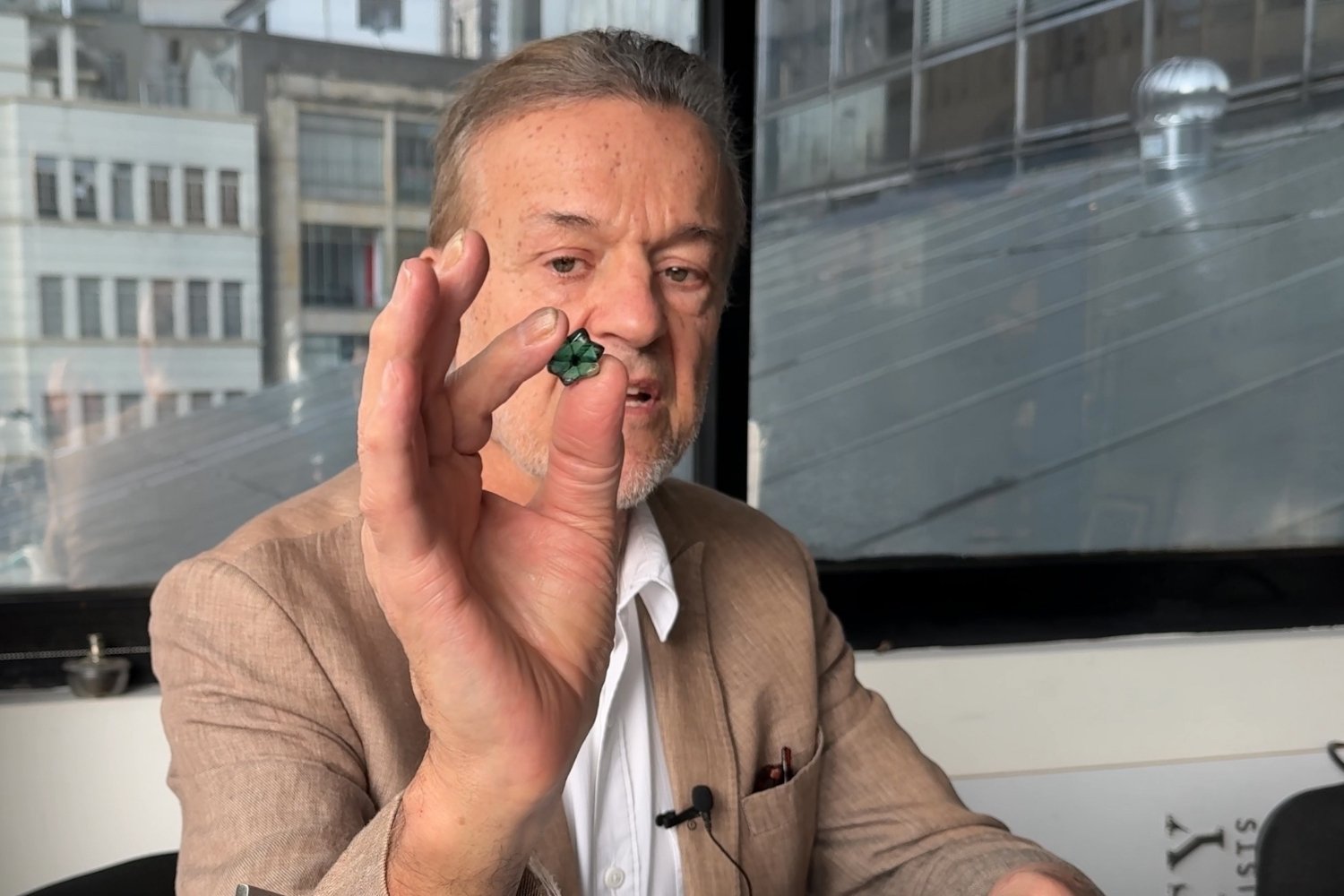
Ron Ringsrud presents a magnificent colombian emerald trapiche
Ron Ringsrud presents a magnificent emerald trapiche

The Science Behind the Star – Why It Happens

Trapiche emeralds form via an eutectic growth process, where emerald and albite crystallize together. A central emerald core begins to grow under high pressure and temperature, but changes in fluid flow interrupt development. When growth resumes, alternating sectors of emerald and dark matter (such as carbon) radiate outward — resulting in the famous six-arm trapiche structure.

Colombian emeralds’ low iron content and the presence of vanadium enhance the vivid green tone, making the visual contrast with the dark arms even more dramatic.

From Curiosity to Coveted Gemstone

In the past, trapiche Colombian emeralds were seen more as mineral curiosities than jewelry centerpieces. But as public awareness grows — and as artisans explore their aesthetic potential — these gems are gaining new prestige.

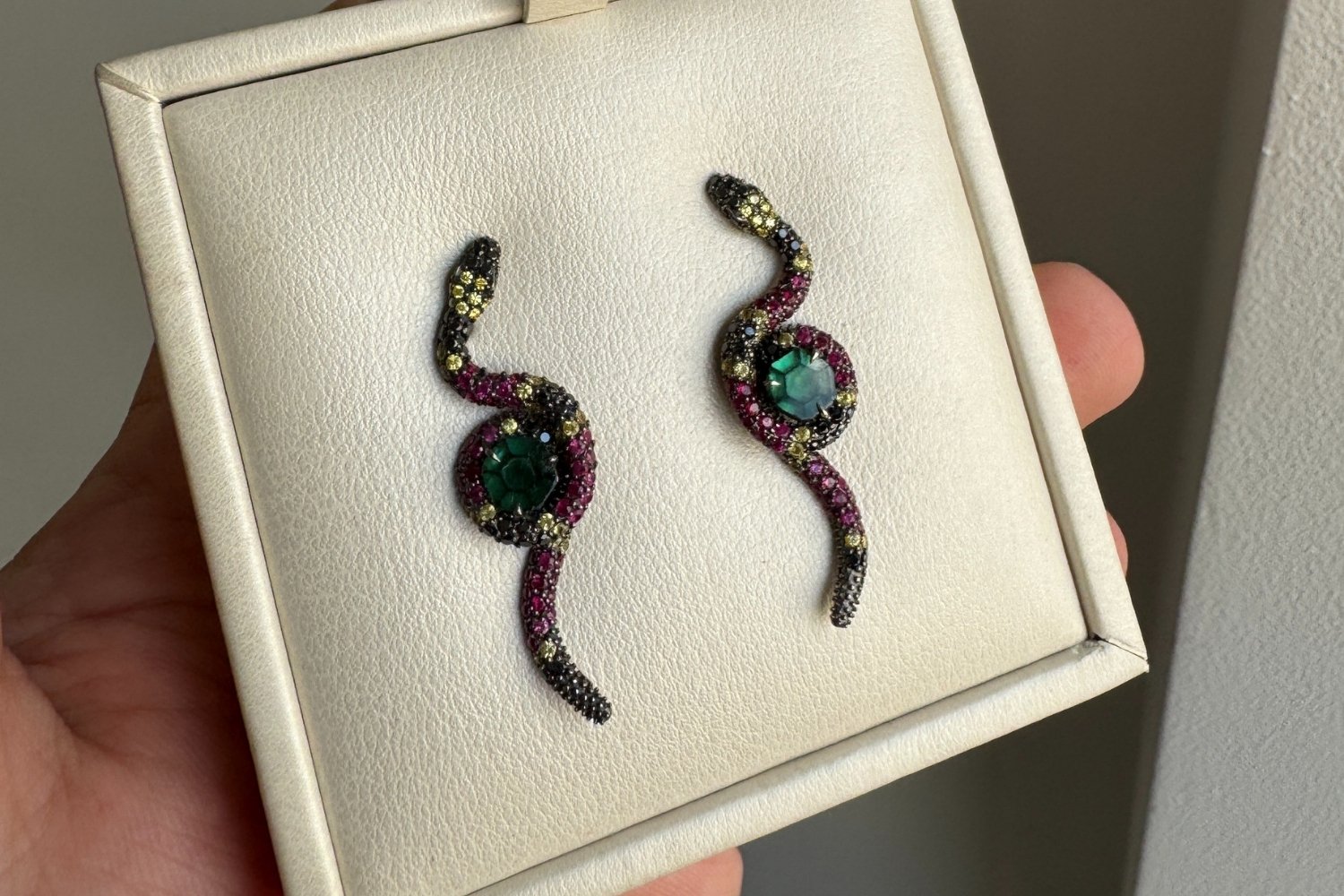
Today, high-end pieces such as earrings and rings set with trapiche emeralds are making waves among collectors and avant-garde designers. Their combination of rarity, graphic symmetry, and historical resonance places them in a class of their own.

colombian emerald trapiche can be use in jewelry
A fine example of the use of trapiche emeralds at Alpine Green

Why the Trapiche Is a Colombian Emerald Like No Other

The trapiche Colombian emerald is not just a variant — it is the visual signature of Colombia’s unique geology. Unlike Zambian or Brazilian emeralds, no other region consistently produces this pattern. Each trapiche gem is a geological time capsule, revealing moments of stillness and disruption that shaped the Earth over millions of years. This emerald is not only rare — it is storytelling in crystal form.

Comments & Questions

Have a question, correction, or insight to add? Share it below. We read every comment and moderate for clarity and civility.

Leave a Comment

Your email address will not be published. Required fields are marked *